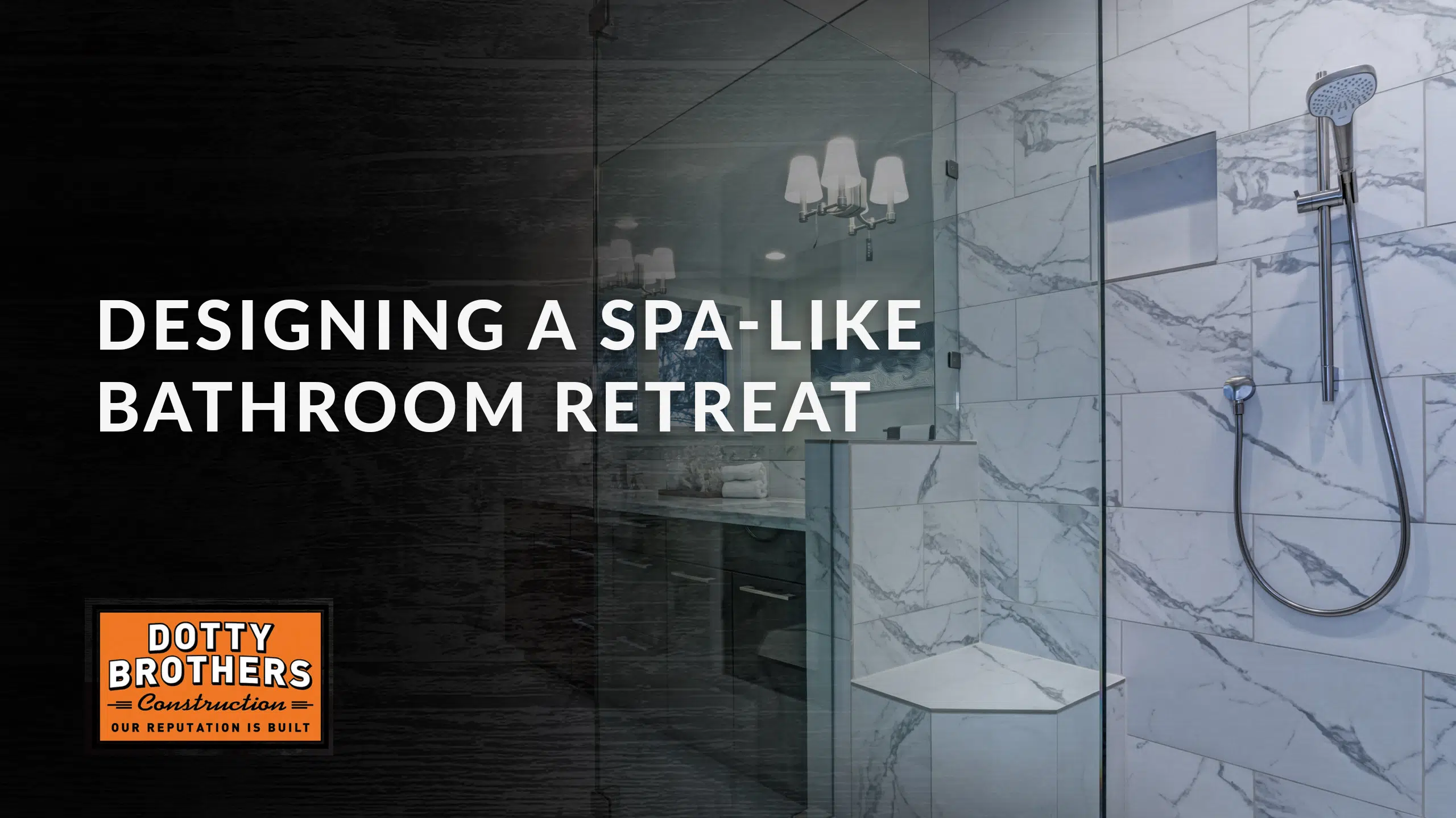
The bathroom in your dream home can be much more than just a utilitarian space — it’s an opportunity to create a spa-like retreat that restores, rejuvenates, and elevates everyday living. A spa-inspired bathroom transforms a routine space into a serene sanctuary that feels like a personal wellness retreat.
Dotty Brothers’ philosophy of crafting one-of-a-kind homes means your bathroom design can be every bit as intentional and luxurious as the rest of your custom residence.
Here are essential features to consider when planning your spa-inspired bathroom with Dotty Brothers:
A freestanding tub invites you to unwind and soak away stress much like the signature baths you’d find at a high-end spa. Whether it’s nestled beneath a picture window or placed as a focal feature, this design element sets the tone for luxury and tranquility.
Seamless, curbless walk-in showers with rainfall heads, multiple body jets, or even steam features bring a resort-level cleansing experience right into your home. Frameless glass and calming tile finishes enhance the sense of openness and relaxation.
Incorporating natural materials, such as stone, wood accents, or pebble flooring helps bridge the indoors with nature and creates a grounded, soothing palette. Paired with soft, neutral colors, these finishes contribute to a tranquil ambiance.
Set the mood with the right lighting. Consider layered lighting with dimmers, natural light through strategically placed windows or skylights, and accent sconces to create a warm, spa-like glow.
Elevated touches such as heated floors, towel warmers, built-in storage, and even aromatherapy or moisture-resistant audio systems enhance the comfort and function of your space, making every moment in your retreat feel indulgent.

What makes a spa-like bathroom truly exceptional is personalization — something we at Dotty Brothers excel at through our design/build process. From initial planning and material selections to custom detailing, our team works with you to ensure the final space embodies your vision and lifestyle.
This thoughtful collaboration means your bathroom isn’t just a place to get ready in the morning — it’s a restful sanctuary you’ll look forward to every day.
With Dotty Brothers, you get:
Whether you’re dreaming of a quiet morning soak, an invigorating rain-shower experience, or simply a calming space to prepare for the day, your spa-like bathroom can be a centerpiece of your custom home — a private retreat that enhances daily life.
Obviously, building dream houses or dream remodels is the primary work we do—the company is called Dotty Brothers Construction, after all.
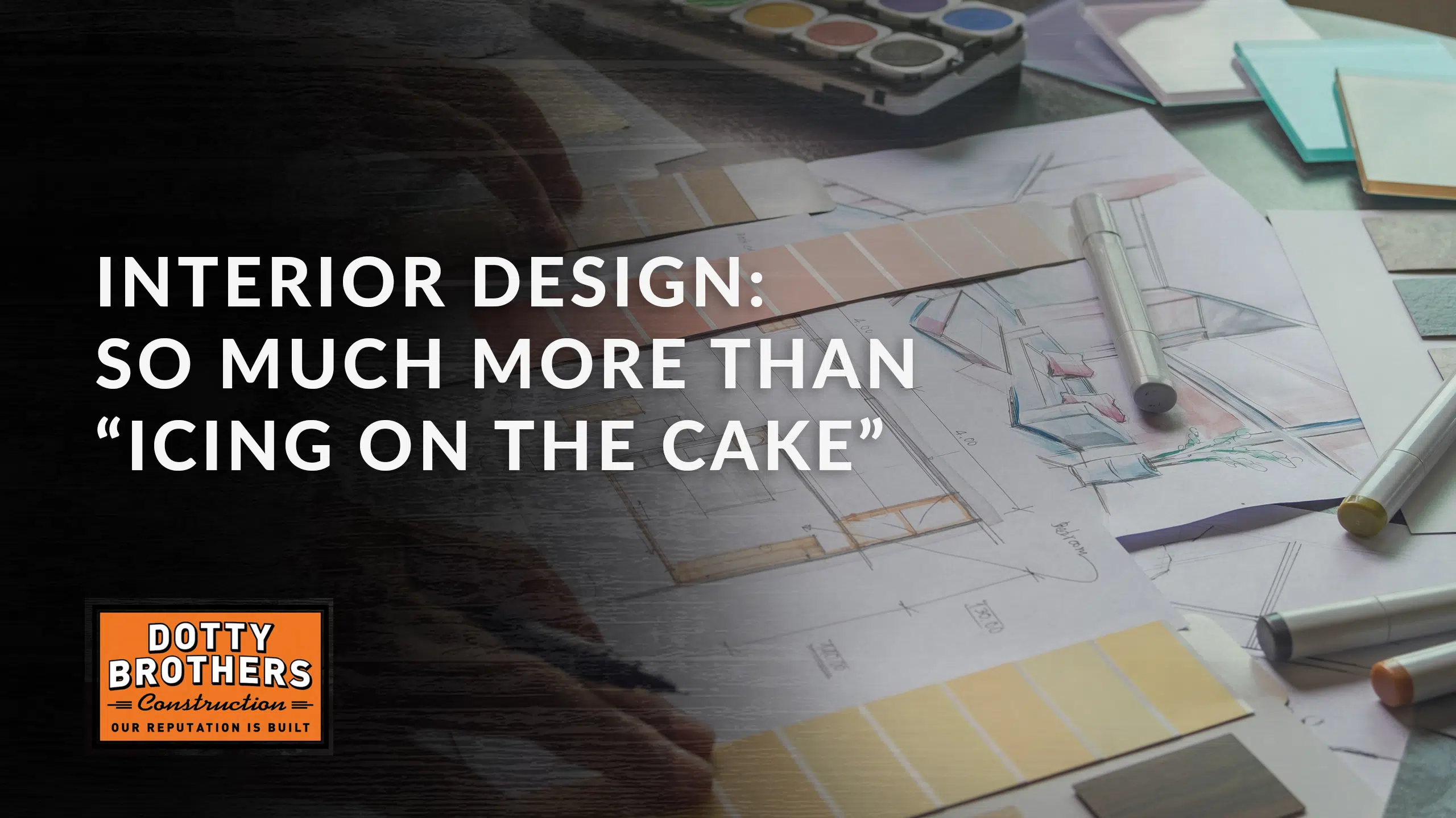
But constructing dream homes is only half of our process. Before anything is built, it’s designed. That part of the journey is just as important as the build itself, and it’s where we really start to get to know our clients. Through the design process, we learn what they envision, why this home matters to them, and how they want it to work for their family for generations to come.
Designing walls, roofs, decks, porches, rooms, halls, and every other part of a home is one aspect of design. Customizing those elements to meet each client’s lifestyle—and determining what the final finishes and details will look like—is another. This is where interior design plays an essential role.
There’s a common misconception that interior design is purely about decorating—the “icing on the cake.” But it’s so much more than that. Thoughtful interior design and space planning are critical components of any design/build project. When considered early in the process, they can inform structural decisions, ensure that spaces function beautifully, and help create a cohesive flow throughout the home.
Careful planning at this stage also helps with another key aspect: staying on budget. Many change orders arise from realizing, mid-build, that something about the space doesn’t feel quite right. Intentional design helps prevent that by working out how you’ll truly live in the space—before construction begins.
For instance, it’s easy to look at a blueprint or rendering and say, “Yes, that great room looks great.” But a well-designed great room should also live great. A stunning view is wonderful, but if there’s no comfortable place to enjoy your morning coffee while taking it in, something’s been missed. Great design bridges that gap between beauty and livability.
We often collaborate with talented interior designers who share our commitment to thoughtful, client-centered design. If you’re beginning your custom home or remodel journey and would like an introduction to a trusted designer, we’d be happy to connect you with someone who fits your style and vision.
Bringing dreams to life is a challenge, but it’s one we love. Our goal is to take your vision and make it real—really beautiful, really functional, and exactly what you’ve always wanted.
Homebuilding has evolved a great deal over the decades, to the point where the type of dream homes we build in the Brainerd Lakes area are now much more air-tight than houses used to be. To be clear, we’re not here to slander home builders of the past. They were skilled, too! But materials, tools, techniques, regulations, and a better understanding of the importance of insulating and sealing homes means that modern-built homes are much more air-tight than older homes.
Being that buttoned up can have a real impact on the indoor air quality (IAQ) of your home. Certainly older, leakier homes can suffer from these problems, too, but those leaks allowed more air in from outside. No matter what the age of our homes, their IAQ affects all of us 100% of the time we are inside of them, and that can impact our lives in significant ways.
There are lots of potential pollutants floating around in a home, from radon and volatile organic compounds to small particles suspended in the air, such as pollen, mold spores, and emissions from burning fuel (cooking with a gas stovetop, for instance).
Some of these can cause severe health problems (radon is the leading cause of lung cancer among non-smokers in the United States). Others are minor or less well understood (maybe a few sneezes when the pollen count is really high).
Either way, the potential for these pollutants in your indoor air is significant, and is often beyond anyone’s control. Radon, for instance, is simply a result of soil geology. If it’s in the ground, it’ll want to get in your house.
The primary method of detection of poor IAQ (with a couple of exceptions we’ll get to shortly) is how you feel. If you have irritated eyes or a persistent cough or a wheeze—any kind of mild, irritated symptom that is worse when you’re in your home—it’s worth looking into what might be causing it. That’s the first step to improving your home’s IAQ.
The two main exceptions to this type of IAQ pollutant are carbon monoxide and radon gas, both famously odorless and tasteless. For the first, the law requires that you have carbon monoxide detectors installed in your home (and every home we build includes them. For the second, radon tests are relatively cheap and simple.
Before anything else, be sure you have working smoke and carbon monoxide detectors installed in your home. The precise building code can vary on this, but Minnesota law (as of 2024, at least!) requires a smoke detector in each bedroom and one on each floor of a home.
If you’re installing a smoke detector, you might as well address carbon monoxide detection, too. There are lots of good combination smoke/CO detectors available at hardware stores or online retailers.
For other pollutants, there are other ways to prevent and mitigate. If you have a forced-air heating and cooling system, be sure your furnace filter has a MERV-13 rating, and change it regularly. How often depends on the filter type and the furnace, as well as your home and its occupants (pet hair can shorten a filter’s usable lifespan). A portable HEPA air cleaner that is appropriate for the size of the room can really help, too.
Radon tests can be purchased at hardware stores but are sometimes distributed by local governments. The Minnesota Department of Health has a good explanation of where to get tests, how to use them, and how often to test. Even if your home has low levels of radon, the Department of Health recommends retesting every 2-5 years. High levels of radon require mitigation, which is typically a fan that draws radon up from below your home and vents it outdoors, where the gas is no longer concentrated (and also isn’t inside your home).
If attempts at improving your home’s IAQ don’t seem to make a difference, it might be time to call in a professional. Some good resources for identifying a reputable IAQ expert are:
The US Environmental Protection Agency has a home IAQ page full of information and resources that can help you protect and improve your home’s IAQ.
One last suggestion, and it’s about as basic as they come. Remember above where we noted that modern homes are just better sealed up than older ones? You can remedy that by opening some windows or doors. That will go a long way toward freshening up the air in your home.
In Minnesota’s lake country, of course, that can be a great solution in May, September, maybe even some of June. But it’s harder to get on board with that plan in the dog days of summer or the dead of winter.
That’s where an air exchanger comes in. Included as part of your home heating/ventilating/air conditioning (HVAC) system, air exchangers are basically big fans that circulate indoor air out of your home and outdoor air in. This is a replacement for the general leakiness of older homes, and it allows you to manage that flow precisely. Air exchangers can be programmed to run at certain times, or turned on and off manually if you want to turn over the air in your home.
Indoor air quality is baked into our design/build process. It’s the HVAC professionals we hire, the systems they design, and the equipment they install. After all, our goal is to build custom dream homes our customers and their families can enjoy for decades, and it’s hard to enjoy your home if it’s making you sick! If you have questions about your home IAQ or want to talk about incorporating smart IAQ design into your dream home, contact us.
Smart home construction principles remain mostly the same as they ever were: strong foundations, straight walls, well-insulated, built to last. But these days, a “Smart Home” is one that leverages the internet and modern technology to put control of your home’s features on your smartphone.
Any home can be made into a smart home using wireless smart devices. There are also wired smart home systems, which have to be planned for and included in the construction or as part of a large-scale gut remodel.
For already-existing homes that aren’t looking to be torn up, wireless connected devices are an easy answer. And as the internet of things expands to include more and more, well, things, many aspects of our homes and the things inside them can, in fact, get smarter.
Door locks, doorbells, lighting, thermostats, home monitors, security cameras—all of these have smart versions that can be added to an existing home to smarten it up. And this can be a really beneficial thing: a thermostat that learns your schedule can save energy by heating and cooling a home less when no one is there to appreciate it. Lights that turn off when there’s nobody in a room save electricity.
Almost all of these smart devices can be installed as stand-alone upgrades, but if you opt for more than a couple, you’ll probably want them all to be compatible with a single smart home hub, such as Amazon Echo, Google Home, or Apple HomeKit, to name just a few.
As we already mentioned, a home’s heating, ventilation, and air conditioning (HVAC) system can be greatly improved by using smart devices. There’s the thermostat, of course, which can learn the routine comings and goings of the people in your home, but those thermostats typically just read your home’s temperature wherever they are installed. Newer smart thermostats have sensor options that can be placed or installed around the house, and you can program them to get finer control over the HVAC.
For instance, if you have a guest bedroom that isn’t occupied often, there’s no need to heat or cool that room as much as your bedroom or the living room. Some of these systems also detect the humidity levels and control whole-house humidifiers or dehumidifiers that can make a big impact on personal comfort.
A smart lighting system can be built into a smart home from the very beginning, but it’s also something that’s easy to retrofit. Smart LED bulbs can be turned on or off, dimmed or brightened, even have their colors changed, and all of that can be programmed to happen at specific times or when motion is detected. The same goes for smart outlets, or smart outlet adapters that can be plugged into regular outlets. You can customize almost anything that you control with a switch or plug.
Some of the safety aspects of the smart home are simple, like the deadbolt on a door. It locks the door just like any deadbolt always has, but you can control it when you’re not home. You can program single-use codes for deliveries or repair people to gain access to your home when you’re not there. If a family member or relative needs to drop by, you can unlock the door for them.
You can get much higher-tech about home security, too. A home security system can include door and window sensors that detect when they’re opened or damaged, and a security camera (or series of cameras) can detect motion, record video, and upload it to a cloud server. All of these notifications can be pushed to your smartphone, too. These are all ways you can increase the security and safety of your home.
Smart household monitors can be connected to your home’s plumbing and electrical systems. A smart water sensor can detect a leak or a frozen pipe and turn off the main water supply before you come home to a flooded house. It can also tell you if the flapper on your toilet needs to be replaced, or if there are unusual demands on your water supply. Monitoring the electrical system can help detect a power surge and protect your appliances, TVs, and other home electronics from damage.
There are some problems and challenges to having a smart home. For one, it can be a pain to track the various passwords necessary to access the different smart devices. If they are all compatible with a single hub, this problem more or less goes away, but the software and hardware are still relatively new and are prone to change.
Smart devices are also more expensive than their “dumb” counterparts, and while prices have been coming down, it’s a worthy consideration.
Software bugs and security risks have always plagued the Internet of Things, and continue to do so. Poor encryption or a programming hole can leave smart devices open to being hacked.
Finally, there’s a data risk. Smart devices learn a lot about you and the people who are in your home, and the manufacturers of the devices are not always up front about what they do with all of that data, where they store it, and how secure it is.
Living in a smart home can be a really terrific experience: lots of tasks and home features can be automated, even curated to your exact requirements, and you can smarten up your home even if it was built before smartness was something that devices could have.
Some degree of smart home characteristics are built into every home now, especially the type of custom dream homes we build. If you have questions about making your home smarter, or designing it that way in the first place, contact us to get your design/build project underway.
Storage. It’s the one thing no home can ever seem to have enough of. It almost seems like a human impulse to fill up the space we have, so even in places with enough storage space, we feel like we’re constantly on the verge of running out.
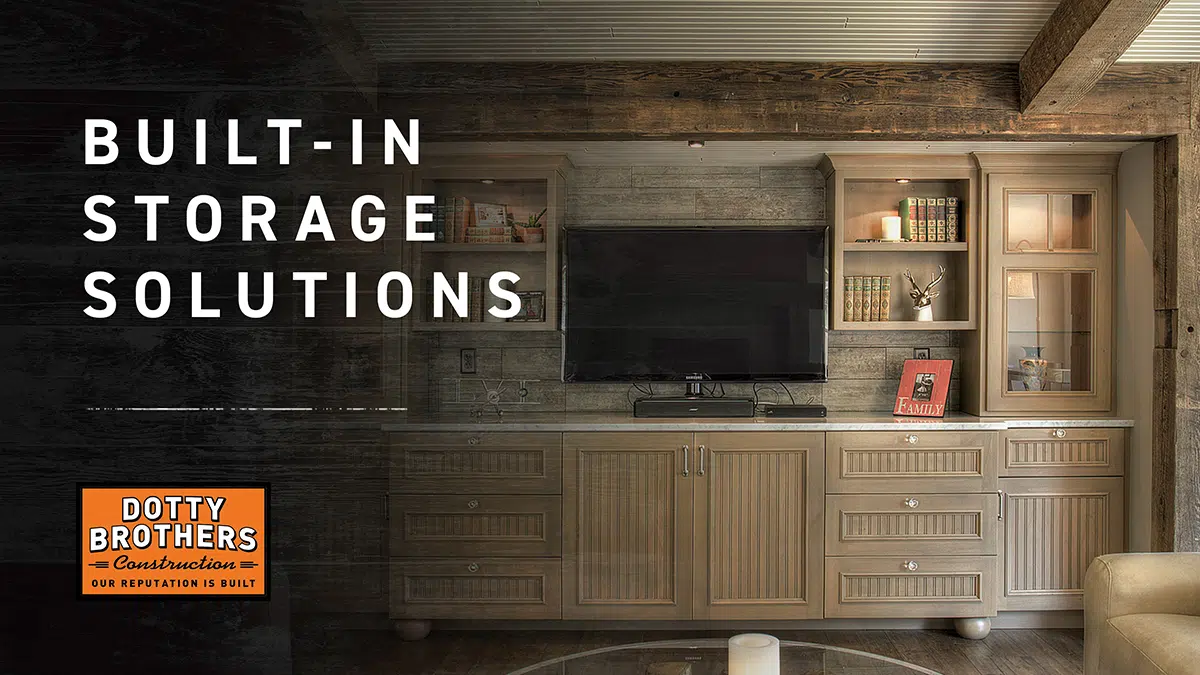
While the best solution is probably a vigorous session of sorting, evaluating, and disposing of the things you don’t want or need anymore, smart built-in storage is definitely part of the answer. And if you are working on a custom design/build dream home, putting the work and imagination in up front is a great way to maximize your available storage, and win the war on clutter.
Classic built-in storage options include bookshelves and dining room cabinets. But these days people own fewer physical books, and while open kitchen designs haven’t killed off the dining room, it’s often part of a larger space and less of a defined room. That means fewer walls to use in built-ins. None of that, however, takes away from how useful a set of smartly placed cabinets, drawers, and shelves can be. They can also contain a lot more than books and grandma’s dining set (all 24 place settings!).
Think of the kind of cabinetry you find in a typical kitchen. It’s probably a mix of drawers, cabinets, and shelves, whether those shelves are exposed or housed within cabinets. The way to create great built-in storage in rooms that aren’t the kitchen is to take the same idea and replicate it elsewhere, with the mix of storage that makes sense for how you live and what your design/décor aesthetic is. That type of built-in can be a lifesaver in creating a functional flex room, for instance, letting you transition from home office to guest bedroom seamlessly and quickly.

A mudroom can be the difference between chaos and order when you first step into your home. Built-in storage, such as lockers or cubbies, can give each member of the family a designated place to hang a coat and a backpack or purse. Pair that with a floor-to-ceiling shoe unit with adjustable shelves and you can stop tripping over everyone else’s shoes (never your own!) and never lose track of a pair shoved to the back of a closet.
Hats, mittens, heavy jackets, and boots are as much a part of Minnesota life as flip-flops, sunscreen, and beach towels. While they are designed for very different seasons and weather, they’re all things that get dropped on the floor when people enter a house. Provide your family and friends with dedicated spaces to hang and store these and other items, and the clutter will vanish.

Everyone (and especially, it seems, Instagram) loves an organized pantry. A place for everything, and everything in its place. But what are those places? Built-in storage, of course! A mixture of drawers and shelves can make it as easy to grab a quick snack as it is to quickly find the ingredients for a five-star meal. Open shelves are a very popular choice in pantry design, especially when paired with matched sets of containers that let people easily see what’s in them.

This is storage designed specifically for a certain appliance, product, tool, or function. For instance, if you use a robot vacuum to clean your floors, a built-in replete with charging station can be located in a toe-kick (the space at the very bottom of a set of cabinets), making functional use of what is typically empty space. Now the vacuum has its own garage when it’s not doing its work.
The same idea might apply if you’re an avid outdoorsperson, or just have kids who love to play in the Brainerd Lakes Area’s snowy winters. Designing a space to store not just wet boots but a boot dryer is a way to make sure that the next time you or anyone else ventures out, their feet are dry (and even warm). These are just two kinds of individually specific storage needs that might not be a big deal for everybody but can make all the difference to an individual or family.
Another built-in to consider is bench seating. Sure, the primary purpose of a bench is to give people a place to store themselves, even if only temporarily. But the space beneath that bench is an ideal place to create built-in storage. Kids’ toys, board games, workout equipment—anything you might want to access easily but then put away quickly can go into below-bench storage. You can transform a room from cluttered to clean in just a few moments, then park yourself on the bench and enjoy the view afterward.
As with most aspects of a custom design/build dream home, the best solutions take the way you and your family live into consideration. The built-in storage solutions have to work for you and your lifestyle. Thinking about what meets your needs and blends into your home’s interior design will leave you with built-in storage that wins on design and function, and helps you manage and house all your stuff.
Interior design and home décor can be a big source of anxiety for homeowners. Many of our customers work with interior designers to help guide these choices. But there’s a fair amount of preparation that you’ll want to do even if you hire an interior designer. Those efforts can go a long way toward helping you make design and décor decisions yourself.
Knowing the measurements of any room you are trying to decorate is critical. But width and length are not enough—you live in a three-dimensional space, and you need to consider that, too. This is less about the height of the ceilings themselves, and more about the distance below and above a window, for instance. Or how wide and tall the fireplace is, and how deep the mantle. Proportion and scale are key to any design, and you can’t fit furniture, art, and other things into the space if you don’t know the measurements. It’s also a great idea to load these measurements into your phone, and keep a small tape measure with you. That way, if you’re out for brunch and happen to spot a great side table, you can check on the spot for how it would fit into your room.
Fortunately, there are more places than ever to look for inspiration, and you can do it without leaving the house. Some of these resources are the obvious online options: Houzz, Pinterest, Instagram, and other home/design-centric websites. These sites are obvious choices because they work—you can scroll a huge array of design choices and options, which can help you refine what you like and, perhaps even more importantly, what you don’t. Seeing things that you just cannot stand can help guide your vision as much as seeing things you love.
You can also think of memorable places you’ve visited for inspiration. Was there a hotel you stayed in you really liked? Maybe a restaurant or bar that had a great vibe to it. Even a friend’s house that you really liked. You don’t have to copy anyone, but think about the places that stick in your memory (for good reasons) and consider how they were designed and decorated.
After you have the measurements of the room, draw up a floor plan that gives you an overhead view. Even if you’re not working on design for an entire house, it’s great to have a full floor plan of the whole place, but at the very least you need to have a floor plan of the rooms you’re working on. This can be done with paper, pencil, and a ruler, or you can use software to help. Professional designers might use drafting software, like AutoCAD, but there are apps that can help you with this, like Magicplan, Floor Plan Creator, and RoomScan Pro.
Once you have the outline of the space, start experimenting with the placement of furniture, making sure that the footprint of each piece is scaled to match the size of the drawing. In this case, scale is crucial, both to your planning and to what you put in the room. Furniture that is too big for a space is just as much a problem as furniture that is too small for a space. When you’re starting to narrow down your selections, a roll of painter’s tape could be your biggest asset. Use it to mark off the footprint of the furniture you’re considering. That will really help you visualize how it will look in real life.
It can be all too easy to overlook this, but ask yourself: what do I want from this room? Are you a person who regularly hosts social gatherings? Or maybe you’re more of a lounge-and-watch-movies type. Both of those are things that could be done in a living room, and yet the ideal design for the two of them is very far apart. For most people, the answer to that question is probably “a little of both,” but thinking through how you want a room to function for you and your family is an important step in determining a design.
Think about the room’s focal point as well. That is, where in the room is your eye drawn as soon as you walk into it? Most of the time this is an architectural feature of the room: a window, a fireplace, a built-in, etc. But it could just be the largest wall or one that faces the doorway. No matter what the focal point is, start there and work out to the rest of the room as you make designs. It might be the place to hang a mirror or favorite piece of art, or a great place to put a couch that invites people in, makes them want to sit, stay, chat. Whatever it is, the focal point will give people an immediate feeling about the room’s purpose.
Time to put on your green eyeshade (ooooh, maybe a vintage banker’s desk lamp would be just the ticket for your home office) and be real about your budget. Design and décor do not depend on money—after all, money can’t buy a person more time or good taste. But most of us are working with some limit on our budget, so the best advice is to set a budget and stick to it. This will help you decide when to splurge on something you love, knowing that you might have to cut back (or value-engineer, if you will) on another aspect of your design.
No matter what direction you go with your design and home décor, you’re the one who lives there. You want your home and all its rooms to work for you. What you need from the room might change over time, but it should always be a space that serves to make you happy.
Finally, the one thing that everyone seems to agree on is mirrors. You can’t go wrong with mirrors, big mirrors, one in every room. Position them to bounce light around the room. Make sure, though, they are not directly across from windows, because that’ll bounce the light right back out of the room.
If you want to get started on your own custom design/build, with or without an interior designer, contact Dotty Brothers at 218-568-6160, or find more information at dottybrothers.com.
Having guests visit your home is fun. Hosting, entertaining, enjoying each other’s company. And when the guests are fun enough that you want to spend time with them morning, noon, night? Even better! And when you can offer them their own room, bed, space in your house? Peak hospitality! It’s great to have a guest bedroom.
But… how frequently do you have guests? If you’re like most people, a guest room is only occupied a few times per year. To maximize that space, re-think it. That little-used guest room is the perfect place for a flex room.
What is a flex room? It’s just like it sounds, a space in your home that offers flexibility. It can be primarily one thing (a home office, maybe) but also serve as another (like that infrequently used but still comfortable guest room).
The COVID-19 pandemic demonstrated there was a lot of office work that could be done remotely without any loss of productivity. Many digital workers have transitioned to part- or full-time work from home. Some companies even shuttered physical offices and transitioned to virtual offices only. If you have an “extra” room, it could probably be put to more efficient use as an office than for hosting guests. Hence, the guest office, probably the most common of flex rooms.
The key to creating an effective guest office is to remember the room’s primary use—in this case, an office—and to prioritize that use, while still balancing its function as a guest room when needed.
Consider the office first: what type and size of desk do you need? The smallest but still comfortable, usable size is the way to go here. Whether it’s free-standing, built into a set of bookshelves, or any other configuration, it needs to work for your work.
Consider storage cubbies or bins that make it easy to tidy up an office when you have guests. Can the desk double as a dressing table? Even better! Consider an office chair that is also comfortable to sit in—this can double as your workplace seat but also a place for a guest to sit and relax or scroll their phone before bed.
The classic piece of flex space furniture is a futon or pull-out sofa bed. However, anyone who’s ever slept on one knows they’re not terribly comfortable. There might well be a comfortable unicorn futon or sleeper sofa out there, but we haven’t found it yet.
It’s easier to work with a bed that is only a bed, or consider a Murphy bed. These wall beds usually contain regular mattresses and are as comfy as a bed, but they tilt upright when they’re not in use (often appearing to look like a cabinet), meaning your guest office can double in floor space in just a few seconds.
The balance can be tricky, but thinking about how you want to feel in your office and how you want your guests to feel in the guest room will guide you in the right direction.
There are other common uses for a flex room. Often, one half of the flex is for a guest room, but these could be combined in almost any manner (though the playroom might be a tough one to flex in and out of).
Kids, especially little ones, can be pretty messy. Having a room dedicated to the use and storage of their toys, games, coloring books, and dress-up clothes can help ease the burden on the rest of the house (and on whoever has to pick up after them). Smart shelving and storage in this room can go a long way to making it possible to use as a playroom/guest room, but even if all it does is contain some of the clutter, it’s a win.
How easily this room flexes into a guest room depends on how you exercise. If you have an exercise bike, a full rack of weights, and a bench, then trying to move all that out of the way is going to be a workout on its own.
However, if you practice yoga, do body-weight workouts, or don’t need a ton of equipment, it can be a quick shift to roll up your mat and tuck it into a closet. Some of the same details that you might focus on for an exercise room—aromas, plants, air movement—can make for a really comfortable guest room.
If you’re a music, book, or movie/TV lover, a private oasis where you can focus on and enjoy those hobbies can be priceless, and a flex room can be a perfect place for that. The good news is that lots of the things you want for that room—comfortable seating, relaxing colors and décor—are things guests will appreciate, too.
One challenge might be the amount of space any physical media takes up. If you have stacks of books, records, or Blu-rays all over the floor, it might not be an easy changeover to a guest room. Smart storage is a good solution for this adult playroom, just as it is for the kids’.

Here’s one that can appeal to adults, kids, or both. The particulars of this type of room depend on the crafts going on. Someone doing sewing projects will need a large, flat surface to lay out and measure fabric. A painter might need to prioritize natural light. A woodworker might need… well, to go work in the garage, or an outbuilding workshop. (Even a perfect flex space craft room can only adapt so far!)
As with most of these multi-use spaces, organization and storage is key to keeping the space flexible and not turning into the room where everything is piled on the bed.
This is a separate section because all the spaces listed above require lighting. The ideal solution would be to have good general overhead lighting that can be dimmed, mood-setting accent lights (also dimmable), and focused task lighting that is customized for the brightness and color spectrum best suited for the task. Craft room lighting won’t be the same as reading room lighting.
If you’re not in position to gut the flex room and customize the lighting, there are ways around that. Use the “flex” part as inspiration: select light fixtures that can be adjusted, moved, and dimmed or brightened. Floor lamps with arms that can be repositioned, for instance. Even the clamp-style reading light can have a place in this plan.
LED technology has made it much simpler and cheaper to customize where you have lights and how they look. (You can even have them change color and pulse to the beat of music if your flex space is a dance room!)
A good, useful flex room is about balance. What percentage of the room do you want for one use compared to other uses? If you want a flex space that’s 60% office, 25% yoga room, and 15% guest room, use those numbers to guide your furnishing and décor decisions. With a little creativity (and a lot of smart storage) you’ll have a flex space that matches your needs.
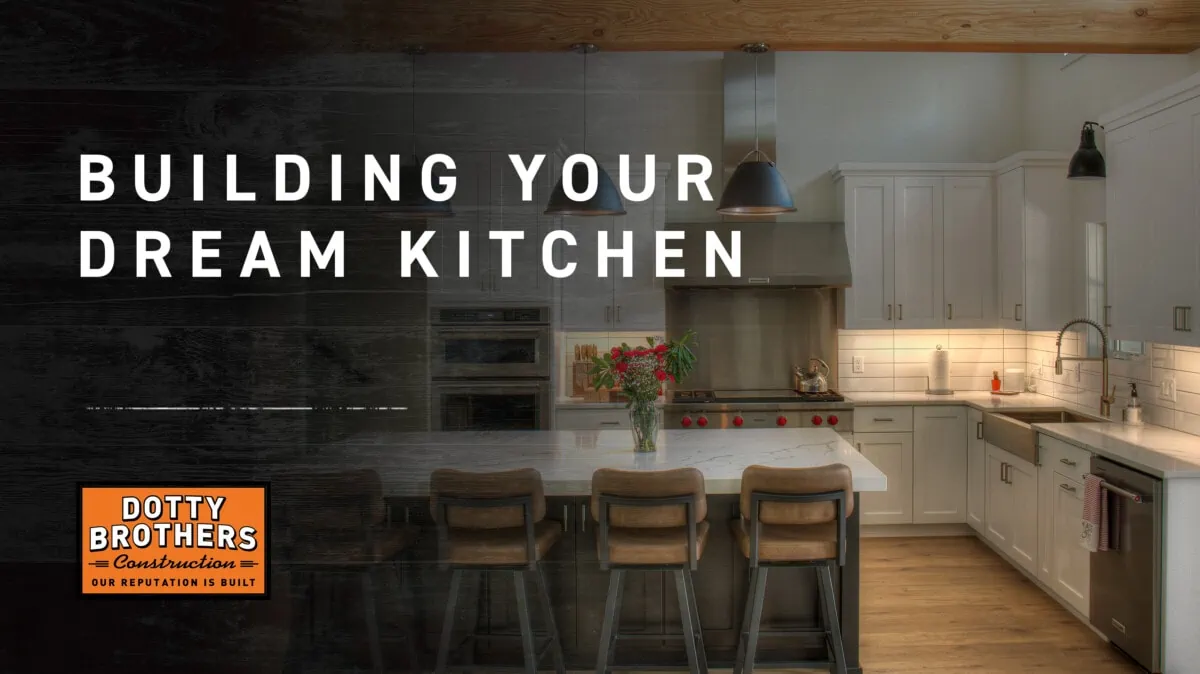
Kitchens are the beating heart of a home. Even if you’re not much of a cook, it’s a gathering place for family and friends—host a party, and see where everyone ends up congregating, right? When our clients envision their custom dream homes, a beautiful kitchen is always part of the plan. Below are some kitchen suggestions you might not even know you needed.
One note: the trend of designing a back kitchen (also called a pantry kitchen, prep kitchen, or spice kitchen) has been gaining popularity among high-end homes. In that type of design/build, there’s the main kitchen, which is largely for show, and a second, more tucked-away kitchen, where actual cooking is done. It’s a nice way to hide the clutter, spills, and smells of a functioning kitchen. The suggestions below can be applied to main kitchens, back kitchens, or both.
Custom cabinets are almost always part of a custom home. They maximize the kitchen’s footprint and can be designed precisely for your needs. The style of the cabinets themselves are almost limitless: type of wood, finish, color, door style, pull, etc.
This isn’t about the style of the cabinets so much as functional design suggestions. For example, deep drawers near the range are incredibly helpful. These large drawers with heavy-duty drawer slides can hold the pots, pans, Dutch ovens, woks, or other cookware, right where you need it. Sometimes a shallow pull-out within that drawer is included to house the lids for the pots and pans.
Be sure to plan a space for trash, recycling, and even compost bins. It’s not glamorous, but it’s necessary and can make so much difference in the day-to-day use of your kitchen. You can even include pet-friendly amenities like storage for pet food, bowls, beds, etc. A built-in feeding/watering station can be opened to allow your pet to join you at mealtimes without its bowls being perpetually underfoot.
Some cabinets just have shelves, others have drawers or a combination of both. If you opt for drawers, especially in a cabinet that will be used to hold dry goods and snacks, be sure the drawers use full extension slides for access, and that they have high enough fronts, sides, and backs to corral their contents and keep that cabinet organized.
Some other custom cabinet ideas include a tall cabinet with lots of dividers for tray storage; a drawer peg system to customize how you arrange items like plates and bowls inside the drawer; and narrow, pull-out drawers near your cooktop for easy access to herbs and spices.
An on-counter appliance garage can be a great place to store a toaster, coffee pot, stand mixer, or other kitchen tools you want to keep handy, but you don’t want on the countertop. Planning for an outlet inside the garage keeps the cords for these appliances contained as well.
In all instances, insist on soft-close drawer slides and cabinet door hinges; they’ll help prevent wear and tear on the cabinetry as well as keeping the noise levels down.
This certainly includes the big four—refrigerator, range, oven(s), and dishwasher—but it’s also so much more. Individual, specific appliances like a wine fridge, steam oven, or dedicated coffee bar can make a big impact. Double ovens can have more than twice the impact, especially if you’re cooking for large groups or holidays.
Here, as with most other aspects of a dream kitchen, the options are almost limitless. Your fridge and dishwasher can be built in and faced with the same cabinet doors as the rest of the kitchen. You’ll need the appliance pulls from the same family as the other cabinet and drawer pulls, but otherwise it’s a very seamless blending of the appliances with the cabinetry.
Modern appliances can be (like everything else) connected to the internet and managed by an app on your phone. There are even apps that will track your refrigerator inventory, reminding you to use fresh fruits and vegetables before they spoil, and letting you know which groceries you need to re-stock.
Don’t forget to plan for a range vent or hood. Modern appliances crank out more heat than they used to, and that’s before you consider installing commercial-style (or actual commercial) appliances. Those put out serious heat and need to be matched with sufficient venting capacity. A built-in range hood that matches surrounding cabinetry can help turn the range area into a visual centerpiece for the kitchen.
It can be easy to overlook (though your designer and electrician likely won’t let you), but lighting is critical in a kitchen. You need to be able to see what you’re looking for and working on. One good way to imagine how to light up a kitchen is to think of the lighting as having layers. Overhead recessed cans put out broad, room-filling light that brightens the entire space—this is ambient lighting, and it’s what makes a kitchen feel bright or gloomy at first glance.
Then there’s task lighting, such as under-cabinet LED strips and other sources, to focus light where you need it (for example, a prep area or over the sink).
Accent lights, such as pendants, sconces, or lights inside of a glass-front cabinet, help set the mood in the kitchen when you don’t need bright lighting. You can even consider under-island lighting if the countertop offers an overhang. Those same LED light strips can be programmed to show almost any color, or even shift through a color spectrum. Toe-kick lighting (that little space underneath cabinets where your toes fit) can create a very cool visual effect as well.
Many of these will be driven by style and personal preference, but there are a lot of considerations. Single-or double-basin? Do you want a separate bar sink? They can be a real asset when you’re having a party, or when you just want to create a separate drinks station. What about a pot filler? If you’re into pasta, it’s very convenient to not have to lug a heavy pot between the sink and the cooktop.
Then there are the fixtures themselves. Almost any shape, style, and finish, of course, but high-end faucets offer features like integrated LED lighting, water dispensed in specific measurements, and touch-sensing that lets you turn the water on or off with just a touch of your finger (or, if you’re holding a big pot with two hands, a nose).
Custom design/build homes are almost always the culmination of someone’s dream. And the kitchen is no different. Just about anything you can dream up, you can have, with style and functionality that will keep you cooking happily for years.
Contact us about your future dream kitchen.
There are a lot of ways to keep a house warm in the winter. The very best way is to plan and build for that. In the past, houses were typically framed up using 2x4s for all walls, whether they are interior or exterior. These days, new builds use 2x6s for the exterior walls. That allows for 50% more insulation in the walls and is a huge win for efficiency. Insulation in general is also much more front of mind for contractors and home buyers. The federal government’s Energy Star program suggests most attics be insulated to R-38, which is 10-14 inches of attic insulation, depending on the type of insulating material. In the great, cold north of Minnesota, you might have 18-24 inches or more. After all, it’s much easier to plan for that kind of efficiency from the start, and a few more inches of insulation is cheap relative to years of heating expenses. But you can also add insulation to an attic; just be aware of whether you are using faced or unfaced insulation: faced insulation has a vapor barrier, and you don’t want to trap moisture inside the insulation.
Heated floors are another great way to warm up a house. For some types of in-floor heating, it’s once again much easier to plan for it from the start and build it into the home. For example, a boiler system that circulates warm water through tubing inside a concrete slab or floor. That turns the entire floor into a source of heat, radiating into the house. It’s also nice and warm underfoot. This effect can also be achieved by running electric wires underneath the floor, and it is much easier to do as a renovation than a hydronic system. But no matter what, installing in-floor heating should be done as part of a larger renovation, because all the flooring has to be removed, and in all likelihood the subflooring as well.
Properly installed, energy-efficient windows are a vital factor, too. Choosing the right type of window is important, especially in Minnesota. For our cold weather, wood, vinyl, fiberglass, or composite window frames are the best choices. Wood with vinyl cladding is even better because the vinyl protects the wood. But don’t select aluminum window frames. Aluminum simply doesn’t hold heat well, and it’s a poor choice for cold climates. Triple-pane, low-E glass is a great choice for the window itself. Low-E glass is treated with a thin metallic coating that filters certain types of light into your home, helping give you some solar heat during the winter. Installation matters, too, especially making sure that the gaps around the windows are sealed and caulked.
Even if your house is already built, and you’re not planning any major remodeling any time soon, you can still make some simple, DIY efforts to keep your home warm. For one, adding weather stripping to windows and doors is an easy way to help seal off air leaks, which are very common with older windows. If you can feel air leaking around outlets on exterior walls, you can add a foam gasket underneath the outlet’s wall plate. Just remove the screw(s) holding the plate onto the outlet, punch out parts of the gasket to allow the outlet to come through the plate, and push the gasket onto the outlet. Then re-attach the wall plate. The gaskets come pre-perforated so you can customize their fit to any type of outlet.
Design choices can make an impact on keeping your home warm, too. A heavier set of curtains acts as a barrier to breezes leaking through gaps around the window. You can install blinds that are intended to block cold as much as light or sightlines. A thick rug almost instantly warms up a hard floor. If you have a fireplace, it will certainly make a space feel warm. Though, unless the fireplace is designed to pump out heat, it’s probably a net loss for your home as a whole. Lighting a bunch of candles can give the same cozy feeling without the energy loss. Look at where your furniture is as well: are you blocking any vents or diffusers that would otherwise be blowing warm air from a furnace or heat pump? Making sure ducts and returns are unobstructed will help maximize the efficiency of forced-air heat.
From big projects to small steps, there are lots of ways to help keep a house warm in the winter. And one thing we know about living in Minnesota is that winter is always coming.
We don’t spend much time at Dotty Brothers chasing trends. Trends come, go, come back, fade again—they’re transitory by nature. And our process is to build generational homes that stand the test of time and use. We custom design and build every home and remodel project, so that it’s tailor-made for the family that lives there. But that doesn’t mean we’re hidebound, only doing things one way: we’re always looking for good ideas, new innovations, ways to make our clients’ homes more comfortable, longer-lasting, safer, better. That means we are attuned to trends in the home building industry. Here’s what we’re seeing lately.
Most of our builds are in the Brainerd Lakes Area, which is rich with natural resources: lakes, forests, rivers, trails—so it’s no surprise that people who are drawn to the area are also drawn to those natural elements. But we’ve been seeing a lot of those kinds of elements in our design/build projects. Hardwood floors, of course, even porcelain tile that looks so much like hardwood you have to get down and tap it with a ring to tell that it’s not. We’re seeing some of that on walls, too, especially as an accent or as part of built-in shelving or cabinetry.
Stone and tile are showing up in places you’d expect, like granite or other stone countertops and backsplashes, but it’s also being used in some spaces to finish the ceilings. We did a bathroom with a gorgeous walk-in shower that mixed wood and tile on the ceiling, giving the room a transcendentally calm style. The natural materials are lending themselves to natural colors as well: colors drawn from nature, that respect and reflect the locations of these homes.
Roofs have been an underappreciated spot for architectural accents—we’re so used to seeing a large spread of shingles that it’s easy to not think about the kind of touch a metal accent can provide. Think about an accent wall—now apply that notion to the roof. We’ve been seeing more and more “accent roofs” being incorporated into homes. Typically,these are installed over a feature that extends from the home, marking it as separate from the roof at large. For instance, a metal accent roof is perfect for going over a porch, over a portico or entryway, over a bay window, or on its own as a cupola.
Most of the time the metals in use are aluminum, which comes in a wide range of colors, or natural materials like copper or zinc. A copper roof over your front entryway really makes an impression, whether it’s maintained to keep the original gleam or allowed to darken to an elegant patina. No matter what you choose, a metal accent roof can really make your home stand out and look great.
We doubt that brushed nickel or chrome are ever going to be gone for good, but one trend we’ve seen in plumbing fixtures has been to install them with a black finish. It makes sense: the color black can help maintain a neutral color palette while adding some unique character to a kitchen or bathroom. And, as the saying has it, black goes with everything (it probably doesn’t, but it goes with a lot of things). Matte black finishes are also durable and do a good job hiding water spots and fingerprints.
And earlier, where we noted that some styles come, go, and then come back? Say hello to modern brass fixtures. Only a few years ago brass finishes were scorned as part of dated 80s/90s building trends, but the color is back in a big way. People like the warmth and class that brass offers, and much like matte black it seems like it can fit into any design. One reason is something that’s categorized as “brass” can come in a wide range of shades and textures. There’s something there for everyone.
This is part of the natural materials/looks trend, but it warrants its own mention because of how substantial an impact timber can have on a design. That makes sense; after all,a timber is by definition a large piece of wood. In some cases, the timbers are purely decorative, adding a rustic feel to a home. In other cases,these big logs are used traditionally: as structural parts of the building itself, typically as columns, rafters, or joists. The difference here is that they are left visible, and they are finished in a way that highlights their natural beauty and impressive physical presence. Especially for homes in lakes country, where they are often surrounded by trees, these timbers are a really nice way to bring the outside in, and be a reminder of the environment we live in.
Design trends will continue to come and go (with the occasional comeback), but one thing you can always count on from Dotty Brothers is thoughtful, unique design coupled with skilled builders and the level of craftsmanship we’d use if we were making it for ourselves. That kind of service never goes out of style.